Risk Based Inspection (RBI)
Scope of Services:
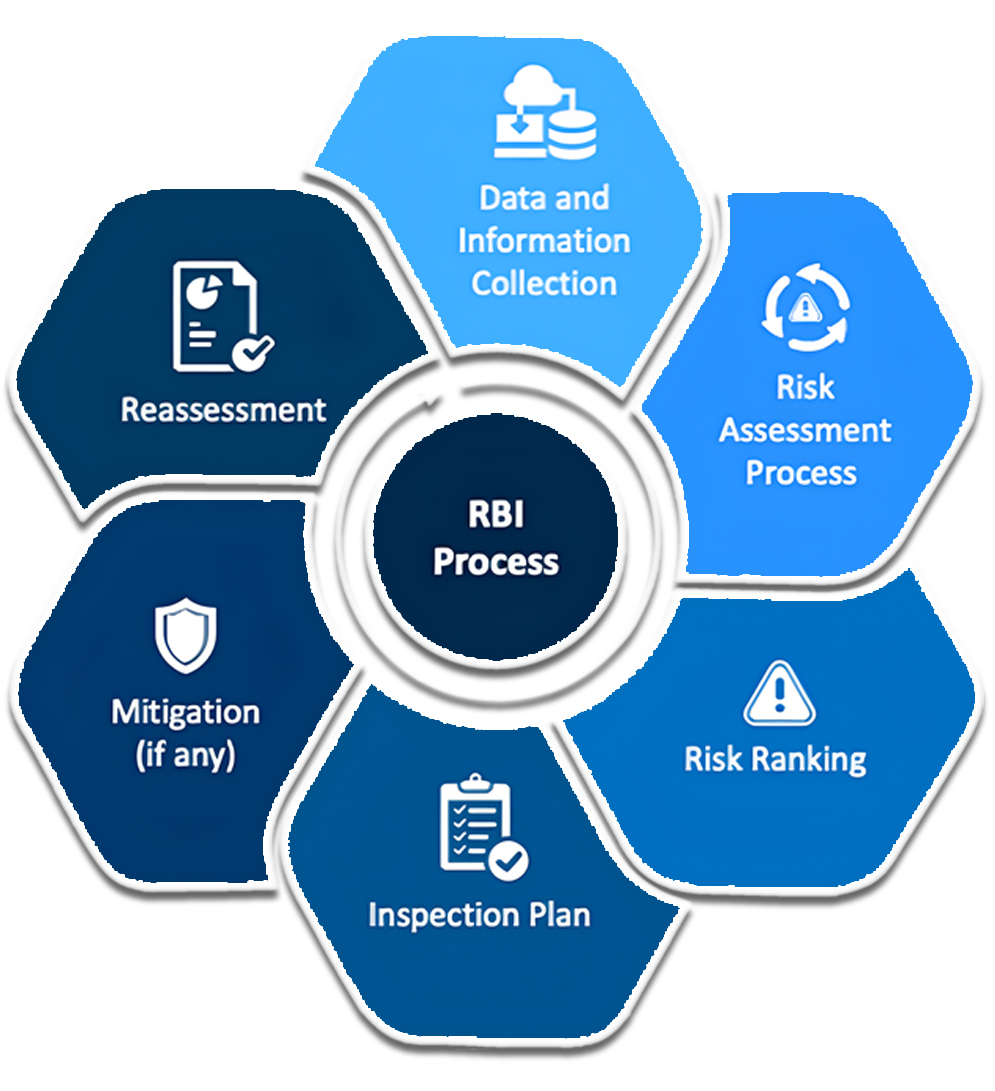
- Data and information Collection
- Equipment Screening & Criticality Assessment
- Damage Mechanism Review (DMR)
- Risk Assessment
- Development of risk-based inspection plans
- RBI Software and methodologies
1. Data Collection
Design – operating – Inspection data.
Collection of design, operating, and inspection data:
- P and IDs, isometrics, GA drawings.
- Equipment datasheets.
- Material specifications.
- Corrosion loops and circuits.
- Process and operating parameters
Data Review
- Inspection history.
- IOWs excursions.
- LOPCs and failure history.
- Maintenance records.
2. Equipment Screening & Criticality Assessment
Typical equipment for RBI analysis:
- Pressure vessels.
- Piping systems.
- Storage tanks.
- Heat exchangers
Criticality ranking:
- Safety impact.
- Environmental impact.
- Reputation.
- Production loss.
3. Damage Mechanism Review (DMR)
Creation of corrosion loops and identification of applicable degradation mechanisms including:
- Corrosion (internal/external).
- Erosion.
- Cracking mechanisms.
- Fatigue
4. Risk Assessment
Probability of Failure (POF)
Based on:
- Corrosion rates.
- Metallurgical degradation.
- Cracking mechanisms.
- Inspection effectiveness.
- Operating conditions.
Consequence of Failure (COF) Evaluation of:
- Health & safety impact.
- Environmental consequences.
- Reputation damage.
- Financial/production losses.
5. Development of risk-based inspection plans
Establishment of:
- Inspection intervals.
- Inspection methods (NDT techniques).
- Inspection locations (CMLs/TMLs).
- Integrity Operating Windows (IOW) development.
Recommendation of inspection techniques based on failure modes:
- General corrosion.
- Localized corrosion.
- Cracking.
6. S-RBI Softwares and methodologies
Experience with industry RBI tools
- S-RBI software (IMS PEI).
- Antea.
- GE APM (Meridiam).
- Nexus (Wood PLC).
Experience with RBI Methodologies
- API 581.
- Shell RBI Methodology.
- BP RBA Methodology.